Wat Pho

Wat Pho

Wat Pho is our absolute favorite among Bangkok’s biggest sights. In fact, the compound incorporates a host of superlatives: the city’s largest reclining Buddha, the largest collection of Buddha images in Thailand and the country’s earliest center for public education.

Wat Pho

Almost too big for its shelter is Wat Pho’s highlight, the genuinely impressive Reclining Buddha, housed in a pavilion on the western edge of the temple complex. You’ll even find (slightly) fewer tourists here than at neighboring Wat Phra Kaew.

The rambling grounds of Wat Pho cover eight hectares, with the major tourist sites occupying the northern side of Th Chetuphon and the monastic facilities found on the southern side. The temple compound is also the national headquarters for the teaching and preservation of traditional Thai medicine, including Thai massage, a mandate legislated by Rama III when the tradition was in danger of extinction. The famous massage school has two massage pavilions located within the temple area and additional rooms within the training facility outside the temple.

A common public ritual at the temple of the Reclining Buddha is to donate coins (representing alms) in a series of metal bowls placed in a long row to the rear of the Buddha statue. If you don’t have enough coins on you, an attendant will oblige you with loose change for bigger denominations.

History
The first iteration of Wat Pho (officially Wat Phra Chetuphon Wimon Mangkhalaram Rajwaramahawihana) was built in the 16th century as a late Ayuthaya-period monastery. Originally known as Wat Phodharam, it was restored in 1788 by King Rama I, who by then had built the Grand Palace next door and established Bangkok as the capital of Thailand.

Much of what visitors see today was completed during the reign of King Rama III who extended much of Wat Pho in 1832, particularly the South Vihara and the West Vihara, where the Reclining Buddha is housed. The Reclining Buddha was completed in 1848 and remains the largest in Bangkok. The figure itself is modelled out of plaster around a brick core and is finished in gold leaf.

It was King Rama III who also turned Wat Pho into Bangkok’s first public university too. The compound’s array of sculptures and artwork, which include more than 1000 depictions of Buddha, were commissioned to help people learn about history, literature and Buddhism.

Between 1831 and 1841, some 1431 stone inscriptions were added by King Rama III and Thai scholars to preserve cultural heritage, including Thai massages, which is why Wat Pho remains the national headquarters for the teaching of traditional Thai medicine. The compound was last restored ahead of the Bangkok Bicentennial Celebration in 1982.

Tickets and other practicalities<

Wat Pho is open daily from 8:30am-6:30pm and entry tickets cost 200B. Your admission includes a complimentary bottle of water (trust us: you’ll need it) that can be collected at a stall near the Reclining Buddha temple.

Wat Pho dress code
Dress in long skirts/trousers and sleeved shirts when you visit. Shoes must be taken off to enter the temple. You’ll be given a plastic bag at the entrance, in which you can wrap your shoes and carry them with you during your visit. Once outside, deposit the (reusable) bags in a collection vat.
Massages at Wt Pho
There aren’t many sacred religious sights in the world where you can get a massage, but Wat Pho is certainly one of them. As the national headquarters for the teaching of traditional Thai medicine, the school has two Thai massage pavilions located within the temple compound and additional rooms within a training facility outside the temple, providing a unique opportunity to combine relaxation with sightseeing.

Both Thai massage and foot massages are available onsite (30 or 60 minutes) and need to be booked ahead via the Wat Pho Massage website. You can also learn how to give a Thai massage with one-day courses at the Wat Pho Thai Traditional Massage School. Prices start from 12,000B and the courses are available every day expect Sundays. The school is outside the temple compound in a restored Bangkok shophouse in Soi Phen Phat. Other basic courses offer 30 hours spread over five days and cover either general massage or foot massage.
Highlights

Reclining Buddha
Located in the compound’s main wí·hăhn (sanctuary), the genuinely impressive Reclining Buddha, 46m long and 15m high, illustrates the passing of the Buddha into nirvana (i.e. the Buddha’s death). Mother-of-pearl inlay ornaments the feet, displaying the 108 different lák·sà·nà (characteristics) of a Buddha. Continuing the numerical theme, behind the statue are 108 bronze monk bowls; for 20B you can buy 108 coins, each of which is dropped in a bowl for good luck and as a gesture of giving alms.

Phra Ubosot
Though built during the reign of Rama I (reigned 1782–1809) and influenced by the Ayuthaya school of architecture, the bòht (ordination hall) as it stands today is the result of extensive renovations dating back to the reign of Rama III (reigned 1824–51). Inside you’ll find impressive murals and a three-tiered pedestal supporting Phra Buddha Deva Patimakorn, the compound’s second-most noteworthy Buddha statue, as well as the ashes of Rama I.

Other Buddha statues

The images on display in the four wí·hăhn surrounding Phra Ubosot are worth investigation. Particularly beautiful are the Phra Chinnarat and Phra Chinnasri Buddhas in the western and southern chapels, both rescued from Sukhothai by relatives of Rama I. The galleries extending between the four structures feature no fewer than 394 gilded Buddha images spanning nearly all schools of traditional Thai craftsmanship, from Lopburi to Ko Ratanakosin.

Ancient inscriptions
Encircling Phra Ubosot is a low marble wall with 152 bas-reliefs depicting scenes from the Ramakian, the Thai version of the Ramayana. You’ll recognize some of these figures when you exit the temple past the hawkers with mass-produced rubbings for sale: these are made from cement casts based on Wat Pho’s reliefs.

Nearby, a small pavilion west of Phra Ubosot has Unesco-awarded inscriptions detailing the tenets of traditional Thai massage. These and as many as 2000 other stone inscriptions covering various aspects of traditional Thai knowledge led to Wat Pho’s legacy as Thailand’s first public university.

Royal Chedi
On the western side of the grounds is a collection of four towering tiled chedi (stupa) commemorating the first four Chakri kings. Note the square bell shape with distinct corners, a signature of Ratanakosin style, and the titles emulating the colors of the Buddhist flag. The middle chedi is dedicated to Rama I and encases Phra Si Sanphet Dayarn, a 16m-high standing Buddha image from Ayuthaya. The compound’s 91 smaller chedi include clusters containing the ashes of lesser royal descendants.

Phra Mondop
Also known as hǒr đrai, and serving as a depository for Buddhist scriptures, the elevated Phra Mondop is guarded by four yaksha (guardian demons). Legend has it that an argument between the four led to the clearing of the area known today as Tha Tien. Just south of the Phra Mondop is the currently reptile-free Crocodile Pond.

Sala Kan Parian
Located in the southwestern corner of the compound is Sala Kan Parian, one of the few remaining structures that predates Rama III’s extensive 19th-century renovation/expansion of then Wat Pho Tharam. Built in the Ayuthaya style, the structure formerly functioned as the wát’s primary bòht, and held the temple compound’s primary Buddha statue.

The grounds
Small Chinese-style rock gardens and hill islands interrupt the compound’s numerous tiled courtyards providing shade, greenery and quirky decorations depicting daily life. Keep an eye out for the distinctive rockery festooned with figures of the hermit Khao Mor – who is credited with inventing yoga – in various healing positions. Directly south of the main wí·hăhn is a Bodhi tree (đôn po), grown from a clipping of the original under which the Buddha is said to have attained enlightenment, and also the source of the temple’s colloquial name, Wat Pho.

Granite statues
Aside from monks and sightseers, Wat Pho is filled with an altogether stiffer crowd: dozens of giants and figurines carved from granite. The rock giants first arrived in Thailand as ballast aboard Chinese junks and were put to work in Wat Pho (and other wát, including Wat Suthat), guarding the entrances of temple gates and courtyards. Look closely and you’ll see an array of Chinese characters. The giants with bulging eyes and Chinese opera costumes were inspired by warrior noblemen and are called Lan Than. The figure in a straw hat is a farmer, forever interrupted during his day’s work cultivating the fields. And can you recognize the guy in the fedora-like hat with a trimmed beard and moustache? Marco Polo, of course, who introduced such European styles to the Chinese court.
Other tips

  • Arrive early to avoid the crowds and to take advantage of the (relatively) cool weather.
  • Don’t just gawk at the Reclining Buddha and call it a day: Wat Pho’s fantastical, almost maze-like grounds are also part of the experience, and are home to some less hyped but worthwhile treasures.
  •  

Nearby restaurants
You’d be wise to combine your visit to Wat Pho with lunch, specifically lunch at Pa Aew, an open-air stall that serves tasty Bangkok-style curries and stir-fries.

Alternatively, Tonkin Annam serves some of the best Vietnamese food in Bangkok. Come for the phó (noodle soup), deliciously tart and peppery banana blossom salad, or dishes you won’t find elsewhere, such as bánh bèo (steamed cups of rice flour topped with pork), a specialty of Hue.


Nearby hotels
The almost fairy-tale-like Chakrabongse Villas compound incorporates three sumptuous rooms and four larger suites and villas, some with great river views, all surrounding a still-functioning royal palace dating back to 1908. There’s a pool, jungle-like gardens and an elevated deck for romantic riverside dining.

Else you can walk to Wat Pho from Arun Residence, which is strategically located on the river directly across from Wat Arun. This multilevel wooden house has much more than just great views: The seven rooms here manage to feel both homey and stylish (the best are the top-floor, balcony-equipped suites). There are also inviting communal areas, including a library, rooftop bar and restaurant.


Article source

Stiftsbibliothek

Top choice in Dubai

Stiftsbibliothek

If the most incredible masterpieces on earth are wrought for the glory of God, St Gallen’s Stiftsbibliothek (Abbey Library) is like a living prayer. Religious or not, you can’t help but look up to the heavens and fall silent as you step across its creaking wood floor, breathe in the scent of 1000 years of parchment, ink, patience, and purity, and cast a careful eye across its stucco-encrusted ceiling, biblical frescoes, playful putti (cherub-like figures), magnificent globe and shelves lined with 170,000 beautiful leather-bound books. Some of the world’s most precious and elaborate medieval manuscripts are hidden here, occasionally dusted off for exhibitions for all to admire.

Once the beating heart of one of Europe’s finest Benedictine monasteries, the library gave St Gallen a solid foot up the celestial ladder in the Middle Ages. Today, this wondrous space forms the centerpiece of the Unesco World Heritage Stiftsbezirk (Abbey District). If you pilgrimage to just one abbey in Switzerland, this should be it.

History of Stiftsbibliothek St Gallen

Local lore states that St Gallen began with a bush, a bear, and an Irish monk who should have watched where he was going. In AD 612, as the tale goes, itinerant monk St Gall (Gallus), one of the twelve companions of Saint Columbanus, was on a mission from Ireland to the continent. He fell into a briar (bush) and considered the stumble a calling from God. After a fortuitous encounter with a bear, in which he persuaded it to bring him a log, take some bread in return and leave him in peace, he used the record to begin building the simple hermitage that would one day evolve into St Gallen’s cathedral.

Whether or not you believe the bit about the briar and the bear, St Gall was instrumental in sewing the seeds of what would blossom into one of the world’s most splendid Benedictine abbeys, founded by Abbot Otmar in 747 AD. The city of St Gallen sprang up around the abbey and developed into one of Europe’s most important intellectual and religious centers.

In the Middle Ages, monks flocked here from afar to pray, read, study scriptures, and devote years to copying and illustrating manuscripts, a painstaking, solitary act that required a patient hand and a peaceful heart. Arts, letters, and sciences flourished here, and the library grew to impressive proportions, with its manuscripts inspiring accomplished artists and leading literary scholars: from Notker Balbulus to Ekkehart IV.

The abbey survived the threats and fires that ravaged the town over the centuries and the turbulent times of the Reformation. Based on plans by the star architect of the baroque age, Peter Thumb of Vorarlberg, the new abbey was built in the mid-18th century, just before the abbey lands were secularised and the monastery dissolved in 1805. The former abbey church became a cathedral in 1848, and the whole site, including the Stiftsbibliothek, was granted Unesco World Heritage status in 1983.

Architecture of Stiftsbibliothek St Gallen

A style, Peter Thumb of Vorarlberg didn’t do things by halves. Completed just before he died in 1767, the library was his parting gift to the world and magnum opus: a swirling confection of curling stucco and frescoes depicting the early church councils. The plump putti (cherub-like figures) in the window niches embody professions – poet and doctor, botanist and carpenter, musician and painter, astronomer and architect.

A balcony unfurls gracefully along the upper level, with 34 windows allowing a painterly light to stream even on overcast days. No expense was spared on the materials, with bookshelves and bookcases carved out of exquisite walnut and cherry wood. Above the entrance, a pair of gilded cherubs hold a sign saying psyché ratio, the Greek for “sanctuary of the soul” or “soul pharmacy.”

Treasures of Stiftsbibliothek St Gallen


Books & manuscripts
Only 30,000 of the total 170,000 volumes are in the library at any time, arranged into special exhibitions. Among these are 1650 incunabula (books printed before 1501). Of the library’s 2100 precious manuscripts – some of which are true works of art and remarkably well preserved – just a handful are on display. The oldest manuscript, dating to 760, was penned by the monk Winithar, who complained about insufficient parchment.

Among its other literary treasures are the 9th-century Cod Sang 555, the earliest portrait of St Columba, a version of The Rule of St Benedict, the cornerstone of medieval monastic life, and Manuscript B of the Nibelungenlied (The Song of the Nibelungs), an epic poem written around 1200.

St Gallen Globe


Igniting the adventurous spirit in any born traveler, the library’s earth and the celestial globe are a beauty, more than two meters high, replete with naturalistic detail, and still incomplete as some countries were yet to be discovered. The 16th-century original was stolen more than 400 years ago, so you see a very convincing replica now.

Vaulted cellar


For more insight into St Gall and his life and work, delve into the vaulted cellar. This houses the Lapidarium, showcasing a collection of the former church’s Carolingian, Ottonian, and Gothic sculptures. There’s also some interesting background, albeit mainly in German, about the art of illustration. The standout is the late 9th-century Evangelium Longum, an illuminated manuscript with an intricately carved ivory cover bearing the hallmark of the monk and artist Tuotilo.

Egyptian mummy


Hailing from the Deir el-Bahri Temple Complex, Shepenese, the library’s ancient Egyptian mummy dates to 700 BC and was given as a gift to the mayor of St Gallen in 1820, together with two wooden sarcophagi. Shepenese was the daughter of a priest and lived at the start of the Saite Dynasty (672 to 525 BC).

Dom St Gallen


Taking the stylistic leap from baroque to classicism, St Gallen’s twin-towered, mid-18th-century cathedral is only slightly less ornate than the world-famous library nearby. A riot of mint-green stucco and rose marble, the cathedral dances with dark, stormy frescos, cherubs, and saints gazing down from heavenly clouds. The cupola (ceiling dome) shows a vision of paradise with the Holy Trinity at the center. To experience the cathedral at its uplifting best, visit during one of the Dommusik concerts.
Exploring St Gallen
While you’re in St Gallen, factor in time for a stroll around the Altstadt (Old Town), where many houses are embellished with Erker (oriel bay windows), especially around Gallusplatz, Spisergasse, Schmiedgasse, and Kugelgasse, locals have totted them all up and reckon there are 111. Some bear the most extraordinary timber sculptures – a reflection of the wealth of their one-time owners, primarily textile barons.

Need to know
Multilingual audio guides are available at the abbey library and exhibition space counters, as are felt slippers, which are obligatory to protect the parquet floor. Photography is strictly forbidden (even without flash). The abbey ticket cost includes public 45-minute guided tours in German that depart at 2 pm daily; no booking is required.

Article source

La Paz Waterfall Gardens

La Paz Waterfall Gardens

La Paz Waterfall Gardens

This polished storybook garden complex just east of Volcán Poás offers the most easily digestible cultural experience in the Central Valley and is the largest animal sanctuary in Costa Rica. Set aside at least two hours to experience the gardens, but you could easily spend an entire day exploring the natural wonders on offer. Guided tours are available to book and there are several bars and restaurants available on site for when you’ve grown tired of feeding the birds and want to indulge yourself.

Continue reading

The National Road

Exploring America's Historic Pathway: Popular Destinations on the National Road

With the building of the National Road came opportunity and progress. There existed a visionary dream—a dream to connect the vast expanse of a growing nation, bridge the gaps between cities and states, and facilitate the exchange of ideas, goods, and culture. This dream came to life in the form of a remarkable endeavor known as the National Road.
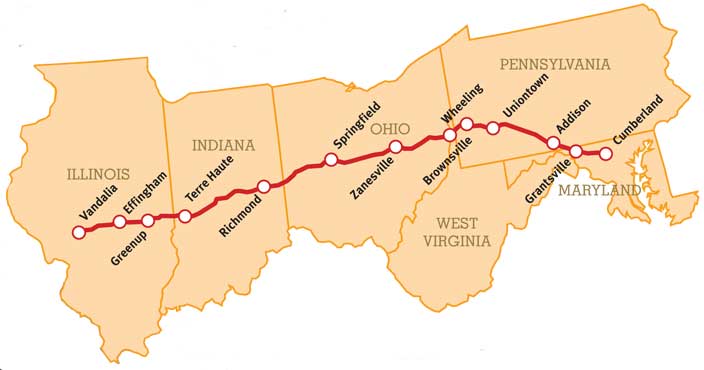
In the early 19th century, the United States was rapidly expanding westward. The need for a reliable and efficient transportation route became apparent to those with an eye for progress. Inspired by the ancient Roman roads, which had connected the far corners of their empire, the visionaries of America set out to create a route that would befit the grandeur of their nation.

Construction of the National Road commenced in 1811, led by President Thomas Jefferson’s administration. Its initial purpose was to connect the Potomac River in Maryland to the Ohio River in Ohio, traversing the states of Maryland, Pennsylvania, West Virginia, and Ohio. The road was built with meticulous planning, utilizing the best engineering techniques of the time.

The National Road was no ordinary road; it was a feat of engineering and a symbol of progress. Stretching over 600 miles, it carved its way through dense forests, crossed mighty rivers, and surmounted the daunting Allegheny Mountains. The roadbed was carefully constructed using crushed stone, providing a solid and durable surface for travelers. Along its path, bridges were erected, toll houses were built, and inns and taverns sprang up to cater to the needs of weary travelers.

As the road neared completion in 1825, a grand ceremony was held to celebrate its inauguration. People from far and wide gathered to witness this marvel of human ingenuity. The completion of the National Road marked a new era of connectivity, progress, and unity. It became a symbol of American ambition, determination, and the spirit of exploration.

The National Road quickly became a lifeline for the communities it touched. Farmers, merchants, and entrepreneurs found new opportunities as their goods could now reach distant markets with relative ease. Towns and settlements sprouted along its path, breathing life into previously isolated regions. The road served as a conduit for ideas, connecting people of different backgrounds and cultures.

Travelers on the National Road witnessed the beauty and diversity of the American landscape. From the rolling hills of Pennsylvania to the majestic mountains of West Virginia, each mile unfolded like a chapter in a grand adventure. Stagecoaches, wagons, and horse-drawn carriages traversed the road, carrying people from all walks of life. Soldiers, pioneers, families seeking new beginnings, and ambitious entrepreneurs all found themselves united on this historic pathway.

However, as time went on, newer modes of transportation emerged, such as railways and, eventually, automobiles. The National Road gradually lost its prominence, becoming a relic of the past. Yet, its legacy continued to echo through the years. Sections of the road were preserved, and its historical significance was recognized. Today, the remnants of the National Road can still be explored and admired by those curious about the rich tapestry of American history.

The National Road stands as a testament to the human spirit—the desire to explore, connect, and build a better future. It was a symbol of unity, progress, and the enduring legacy of the American people. Though its physical form may have faded, the spirit of the National Road lives on in the veins of the nation it once served. And as long as there are dreams of connectivity and progress, the spirit of the National Road will continue to inspire generations to come.


The National Road, is a monumental engineering feat of the early 19th century, holds a special place in American history. Spanning over 600 miles and connecting the Potomac River in Maryland to the Ohio River in Ohio, it became a vital route for pioneers, traders, and adventurers seeking new opportunities in the expanding United States. Today, as a testament to its significance, the National Road boasts several popular destinations that offer a glimpse into America’s past. Let’s embark on a virtual journey along this historic pathway and discover some of its captivating attractions.

  1. Cumberland, Maryland: Commencing our journey from the eastern end of the National Road, Cumberland serves as an excellent starting point. This picturesque city boasts a rich history and serves as the gateway to the road’s remarkable heritage. Explore the C&O Canal National Historical Park, visit the Chesapeake and Ohio Canal Museum, or take a leisurely stroll through the charming historic district. Cumberland encapsulates the essence of the National Road’s beginnings.

  2. Fallingwater, Pennsylvania: As we venture westward, a short detour leads us to one of America’s architectural gems—Fallingwater. Designed by Frank Lloyd Wright, this iconic house blends harmoniously with its natural surroundings. Perched atop a waterfall, Fallingwater showcases Wright’s genius in integrating nature and architecture. A visit to this UNESCO World Heritage site is a must for enthusiasts of design and the arts.

  3. Wheeling, West Virginia: Crossing into West Virginia, we arrive in Wheeling—a city brimming with history and charm. Immerse yourself in the Victorian-era ambiance of the Wheeling Island Historic District, explore the stunning West Virginia Independence Hall, or embark on a riverboat cruise along the Ohio River. The Suspension Bridge, a marvel of engineering, offers breathtaking views and a tangible connection to the National Road’s legacy.

  4. Zanesville, Ohio: Continuing our westward journey, Zanesville awaits with its blend of natural beauty and captivating history. Explore the Y Bridge, an intriguing three-way bridge that spans the confluence of the Licking and Muskingum Rivers. Discover the unique pottery heritage of the region at the Zanesville Museum of Art or take a scenic drive along the Muskingum River Parkway. Zanesville’s allure lies in its combination of small-town charm and cultural treasures.

  5. Columbus, Ohio: As we near the end of our virtual voyage, Columbus, Ohio’s capital, beckons with its vibrant energy and diverse attractions. Delve into history at the Ohio Statehouse, stroll through the picturesque German Village, or immerse yourself in the renowned collections of the Columbus Museum of Art. With its lively culinary scene, thriving arts community, and numerous festivals, Columbus offers a memorable end to our National Road journey.

The Historical National Road Lives On

The National Road weaves a tapestry of history, culture, and natural beauty, and its popular destinations offer glimpses into America’s past. From Cumberland’s gateway to the charming Victorian-era charm of Wheeling to the architectural masterpiece of Fallingwater, and the small-town allure of Zanesville, each stop along the National Road unveils unique experiences. Finally, Columbus, with its vibrant atmosphere, embraces visitors as they reach the road’s western end. As we conclude our journey, let us appreciate the National Road’s enduring legacy, connecting us to the dreams, struggles, and triumphs of those who came before us.

Abbaye du Mont St-Michel

Abbaye du Mont St-Michel

Abbaye du Mont St-Michel

Mont St-Michel’s one main street, the Grande Rue, leads up the slope – past souvenir shops, eateries, and a forest of elbows – to the star attraction of a visit here, a stunning ensemble crowning the top: the abbey.


History
Bishop Aubert of Avranches is said to have built a devotional chapel on the summit of the island in 708, following his vision of the Archangel Michael, whose gilded figure, perched on the vanquished dragon, crowns the tip of the abbey’s spire. In 966, Richard I, Duke of Normandy, gave Mont St-Michel to the Benedictines, who turned it into a center of learning and, in the 11th century, into something of an ecclesiastical fortress, with a military garrison at the disposal of both abbot and king.

In the 15th century, during the Hundred Years War, the English blockaded and besieged Mont St-Michel three times. The fortified abbey withstood these assaults and was the only place in western and northern France not to fall into English hands. After the Revolution, Mont St-Michel was turned into a prison. In 1966 the abbey was symbolically returned to the Benedictines as part of the celebrations marking its millennium. Mont St-Michel and the Bay became a Unesco World Heritage Site in 1979.

Guided tours

Most areas of the abbey can be visited without a guide, but check if the 1¼-hour tour is running; English tours (usually) begin at 11 am and 3 pm from October to March, with three or four daily terms in spring and summer. You can also take a one-hour audio guide tour in 10 languages.

Tickets and other practicalities
Tickets and audio guides should be booked online in advance. Audio guides are available for a small fee and must be requested as part of your booking. Benedictine monks hold services in the abbey, which are accessible to worshippers.

Article source

Cades Cove

Cades Cove

Top choice in Great Smoky Mountains National Park

Cades Cove, Tennessee

In Appalachian parlance, a cove means a valley, but Cades Cove is far more than that. One of the most popular destinations in the Tennessee section of Great Smoky Mountains National Park, many consider this 6800-acre valley to be a national treasure due to its poignant cultural legacy, pioneer architecture and plentiful wildlife.

Cades Cove has more than two million visitors a year because of its historic homesteads, waterfalls and scenic viewpoints all within a verdant landscape of lush green fields enveloped by an unbroken expanse of mountains. It offers some of the best opportunities for wildlife viewing in the wider National Park, and whether blanketed in bright wildflowers in the spring or vivid colors in the fall, its scenery never disappoints.

History of Cades Cove, Tennessee

For hundreds of years, the Cherokee used Cades Cove as a hunting settlement and the valley is named after their local leader, Chief Kade. European settlers – most of them English, Scots-Irish and Welsh – arrived in the 1820s. By 1850, the valley’s population had swelled to 70 households and 451 residents, later reaching a peak of 708. The national park was chartered by the US Congress in 1934, and officially dedicated by President Franklin D. Roosevelt in 1940.

Today, thanks to the excellent preservation efforts of the National Park Service, you can still get a vivid sense of life in Cades Cove during the 19th century. Scattered along the loop road are three churches, a working grist mill, barns, pioneer log cabins and many other faithfully restored structures.

Popular National Park

Cades Cove is the most popular area in the USA’s most popular national park, so go early if you want to beat the crowds. An 11-mile, one-way loop road circles the cove, offering motorists the opportunity to sightsee at a leisurely pace. It is possible to stop at pullouts to enjoy the scenery or view wildlife. Be aware that because of bumper-to-bumper traffic during peak season, it can take five hours to drive the road – longer than it would take to walk.

There is only one driving entrance into the Cades Cove Loop from Laurel Creek Road. Although you may see many online maps that may appear to show multiple entrances, this is the only one leading directly into the loop. The road is open to car traffic from dawn to dusk, except on Wednesdays and Saturdays from early May through late September, when bicycles and hikers rule the road until 10am.

Entrance to Great Smoky Mountains National Park is free. Allow at least two to four hours to tour Cades Cove, and longer if you walk some of the area’s trails. The best wildlife viewing occurs in the very early morning and late afternoon. Pick up the self-guiding Cades Cove Tour booklet ($1) from any visitor center to discover more about Cades Cove’s attractions and history. Day Hikes In & Around Cades Cove is available for a minimal fee.

Waterfalls at Cades Cove

Waterfalls are a huge attraction of Cades Cove and Abrams Falls is one of the most popular falls. The hiking trail to Abrams Falls is located past the #10 stop on Cades Cove Loop Road, and it takes around three to four hours to hike there and back. It’s worth it for the picturesque waterfall, which is located on Abrams Creek. Although it’s only 20-feet high, a large volume of water rushes over the edge into a long, deep pool at its base.

Laurel Falls is another popular waterfall and it is located along the Laurel Falls Trail. It is 80-feet tall and it takes around two hours to hike there and back. Then there’s the Lynn Camp Prong cascades, which can be viewed while hiking the Middle Prong Trail. Tackling this trail means taking a 1.6-mile round trip and is suitable for hikers of all abilities.


What to do at Cades Cove

Numerous hiking trails originate in the cove, including the trail to Abrams Falls and the short Cades Cove Nature Trail. Longer hikes to Thunderhead Mountain and Rocky Top also begin here, and a park trail map can be downloaded from the National Park Service.

Wildlife in the park include white-tailed deer, black bears, coyotes, groundhogs, turkeys, raccoons and skunks. A nearby horse stable provides one-hour horseback rides as well as hay rides and carriage rides from March through October. Cades Cove Visitor Center is located half-way around the loop road in the Cable Mill historic area, and it has restrooms and a bookstore.

Camping is a very popular activity and there are several located within the national park. Cades Cove Campground is open year round, and it has 159 sites and can accommodate tents and RVs up to 35 feet. Call (877) 444-6777 or visit here to reserve a site.


Article source

Teatro Nacional

Teatro Nacional, San José’s

On the southern side of the Plaza de la Cultura resides the Teatro Nacional, San José’s most revered building. Constructed in 1897, it features a columned neoclassical facade flanked by statues of Beethoven and famous 17th-century Spanish dramatist Calderón de la Barca. The lavish marble lobby and auditorium are lined with paintings depicting various facets of 19th-century life.

History - San José’s

When construction began in the late 19th century, the President of Costa Rica was determined to create a lavish and impressive building that was worthy of the moniker ‘National Theater’. However, the population of Costa Rica was quite low – San Jose alone had only around 20,000 residents – and cost was a major consideration. President José Joaquín Rodríguez Zeledón’s solution to this problem was to place a tax on coffee, the main export of the country at the time. The construction was fraught with problems until an Italian engineer was brought in to oversee the entire project and guide it to success.

The theater’s most famous painting is Alegoría al café y el banano, an idyllic canvas showing coffee and banana harvests. The painting was produced in Italy and shipped to Costa Rica for installation in the theater, and the image was reproduced on the old ₡5 note (now out of circulation). It seems clear that the painter never witnessed a banana harvest because of the way the man in the center is awkwardly grasping a bunch (actual banana workers hoist the stems onto their shoulders).

Performances and Tours

Costa Rica’s most important theater stages plays, dance, opera, classical concerts, Latin American music and other major events. The main season runs from March to November, but there are performances throughout the year. The hourly tours here are fantastic – guests are regaled with stories of the art, architecture and people behind Costa Rica’s crown jewel of the performing arts. The best part is a peek into otherwise off-limits areas, such as the Smoking Room, which features famous paintings, lavish antique furnishings and ornate gold trim. Tours are offered every hour on the hour in Spanish and English, to a maximum of 30 people. Children under 12 are free. 

Alma de Cafe

One of the most beautiful cafes in the city, this spot evokes early 20th-century Vienna. It’s a perfect place to sip a cappuccino, enjoy a crepe or quiche and take in the lovely ceiling frescoes and rotating art exhibitions. The coffee concoctions – such as the chocolate alma de cafe, spiked with cinnamon and clove – are an excellent midday indulgence. Once you’re finished soaking up all the culture within the theater, you can easily join one of the city walking tours that start from the cafe.

La Sagrada Família

The Temple Expiatori de la Sagrada Família (Expiatory Temple of the Holy Family) is considered to be the symbol of Barcelona

La Sagrada Família

The Temple Expiatori de la Sagrada Família (Expiatory Temple of the Holy Family) is considered to be the symbol of Barcelona by many residents, and the one place you shouldn’t miss when you visit the Catalan capital.

Initially intended to be a simple Roman Catholic church dedicated to Jesus, Mary and Joseph, the church ultimately became the most prominent example of Catalan Modernism. Pope Benedict XVI declared it a basilica in 2010.

Dreamed up by Catalan architect Antoni Gaudí, the basilica exemplifies Gaudí’s philosophy that nature is the work of God. Gaudí sought to combine Christian speech and biblical allegories with complex natural symbols like organic, geometric shapes which are prominent in every column, pinnacle and stained glass window of the basilica.

The end result is an astounding architectural masterpiece which, despite being unfinished and under construction for nearly 140 years, has become one of the most visited monuments in Spain, receiving 4.7 million visitors in 2019.

History of the Sagrada Familia

The creation and construction of the Sagrada Familia is living history.

Local bookseller Josep Maria Bocabella wanted to build an expiatory temple consecrated to the Holy Family. Bocabella initially assigned the project to the architect Francisco de Paula del Villar, who designed a neo-Gothic project, and began construction in 1882.

However, because of several disagreements with Bocabella, Antoni Gaudí took over the assignment. Gaudí conceived a groundbreaking design that pushed the boundaries of all known architectural styles.

Gaudí’s primary goal was to build a church with facades that highlighted the three phases in the life of Jesus: Nativity, Passion and Glory. The architect’s vision was to incorporate organic symbolism in the architecture, stained glass and design elements in order to tell Jesus’s story as well as highlight some key biblical histories.

In 1891, when development of the Nativity facade began, Gaudí realized that the construction of the Sagrada Família was such an ambitious project that he certainly would not see its completion in his lifetime. In fear of the project being stopped after his death and once the church acquired its worship function, Gaudí decided that, instead of building the central nave, he would start on the external part of the church.

At the time, Gaudí was also working on Casa Milà (La Pedrera) and when that was completed in 1912, he focused exclusively on the construction of the Sagrada Família. He worked on it until he died in 1926 and was buried inside the crypt. After Gaudi’s death, Domènec Sugrañes i Gras assumed the main role of architect.

The temple suffered heavy damage during Spain’s Civil War (1936-39), when a group of anarchists set it on fire, burning a significant part of Gaudí’s workshop. Fortunately, part of his material could be restored.

Work resumed in 1954 and it’s been under construction ever since.

Why is the Sagrada Família not finished and when will be completed?

Even with today’s technology, skilled architects and engineers are finding it challenging to decipher and bring to life the complex geometric shapes that compose what is going to be the tallest church in the world (172.5m).

In addition, despite its international renown, the Sagrada Família is a project that was promoted by the people for the people, so it has always relied on private donations. There have been times in history when there wasn’t any funding, especially during Spain’s Civil War and the decades that followed. It was only after the 1992 Olympic Games in Barcelona, when the city started to gain an international reputation and the number of visitors increased, that construction accelerated exponentially.

The Sagrada Família was expected to be completed in 2026 – for the centenary of Gaudí’s death – but its completion has been postponed because of COVID-19. Work has resumed already but a new completion date hasn’t been announced.

Visiting the Sagrada Família

The site of the Sagrada Família has four main sections: the basilica, the school building, museum and towers. In the past, each section required its own ticket to visit. However, due to COVID-19, the only portion available to visitors is the basilica. 

To visit the basilica, an individual ticket with an audio-guide app – available in 16 languages – costs €26. If you prefer visiting it on a guided tour – available in 6 languages – an individual ticket costs €27, which also allows you to visit the site on your own after the 50-minute tour is finished.

The Basilica

The Basilica is composed of five naves, built in the shape of a Latin cross, the roof of which is supported by the angled pillars. These angled pillars are a treelike column structure that creates the effect of a living forest with dappled light streaming in.

Gaudí Museum

The Gaudí Museum has a recreation of the architect’s workshop, as well as a set of his materials and mockups.

School Building

Gaudí designed and built the school building, which was for the workers’ children, in 1909. Its design is similar to that of the Casa Milà.

The Towers

Four towers representing the 12 apostles ascend from each of the three exterior facades (Nativity, Passion and Glory). Gaudí built the Nativity Facade, and in 2005 it was declared a UNESCO World Heritage site, along with the crypt. On the west side is the controversial Passion Facade, whose architect, Josep Maria Subirachs, has been heavily criticized for being too abstract and not strictly following Gaudí’s model. The unfinished Glory Facade is supposed to be the most gorgeous of the three once it’s complete and crowned with its missing four towers.

How to get to the Sagrada Familia

The Sagrada Família is in the Eixample district, in Mallorca, 401 street. Metro lines 2 and 5 stop at Sagrada Família station. From Barcelona’s Old City, it’s a 30- to 40-minute walk.

When to visit the Sagrada Familia

The Basilica is open to visitors every day of the year, subject to change due to special events taking place inside.

To avoid the largest crowds, it’s best to visit early weekday mornings.

A complete visit takes 2-3 hours.

Things to do around the Sagrada Familia

The Right Eixample is home to some of Barcelona’s major attractions which can be easily visited after your Sagrada Família tour. An unmissable landmark is Hospital Sant Pau, a building designed by Lluís Domènech i Montaner, one of the most influential architects of Catalan Modernism after Gaudí. Monumental, a former but imposing bullfighting arena, is also worth the detour. Finish your Eixample circuit at Barcelona’s triumphal arch, located at Passeig de Lluís Companys, a palm-lined boulevard that leads to Parc de la Ciutadella, the largest park in town.

Where to eat near the Sagrada Família

Be aware that all restaurants surrounding the Sagrada Família cater to the tourist crowd. However, by walking just a few blocks, you come to a particularly local area of l’Eixample.

For Spanish tapas and wine, we recommend Hasta Los Andares. For authentic Spanish tortillas, look for La Granota and, for traditional Catalan food, grab a bite at Olé Mallorca, which tends to get busy at lunch time (2 to 3pm). In the morning, you must stop at Puiggròs, a one hundred year-old patisserie.

Article source


Kite Beach

Kite Beach

Top choice in Dubai

Kite Beach

This long, pristine stretch of white sand, a little way north of Jumeirah Public Beach, is a major draw for sporty types, with a range of activities on offer, including kitesurfing, beach tennis, beach volleyball and kayaking. There’s also a jogging track and a shaded skatepark nearby.

The sand here is super clean and there are showers, wi-fi, toilets and changing facilities, plus lots of food trucks and cafes. The beach also boasts great views of the Burj Al Arab, one of Dubai’s prime landmarks. It gets very busy on Friday and Saturday when a seaside market with crafts and gifts sets up.

To reach the beach head along Jumeirah Rd; the strip of sand is located behind Saga World shopping centre. Parking is available, with a large lot next to Al Manara Mosque. There’s no entrance fee to access the beach.

Restaurants near Kite Beach
There’s a decent smattering of restaurants right next to Kite Beach that’ll suit most tastes. Options include Circle Café, serving breakfast, brunch, coffee and smoothies; popular burger and steak joint X Factor; and Italian-themed Tomato & Basilico. There are also a number of food trucks (notably the excellent Salt, which serves up scrumptious sliders), ice cream places and takeaway coffee spots mere steps from the sand.

Hotels near Kite Beach
Jumeirah offers a great selection of accommodation options. Luxury lovers should steer towards the Burj Al Arab or the hotels at Madinat Jumeirah. The cluster of midrange hotels and hotel-apartments next to the Mall of Emirates offer great value for money. For proximity to Kite Beach, however, Beach Walk Hotel and Park Regis Boutique Jumeirah are two good options, both a 25 to 30 minute walk away.

Article Source